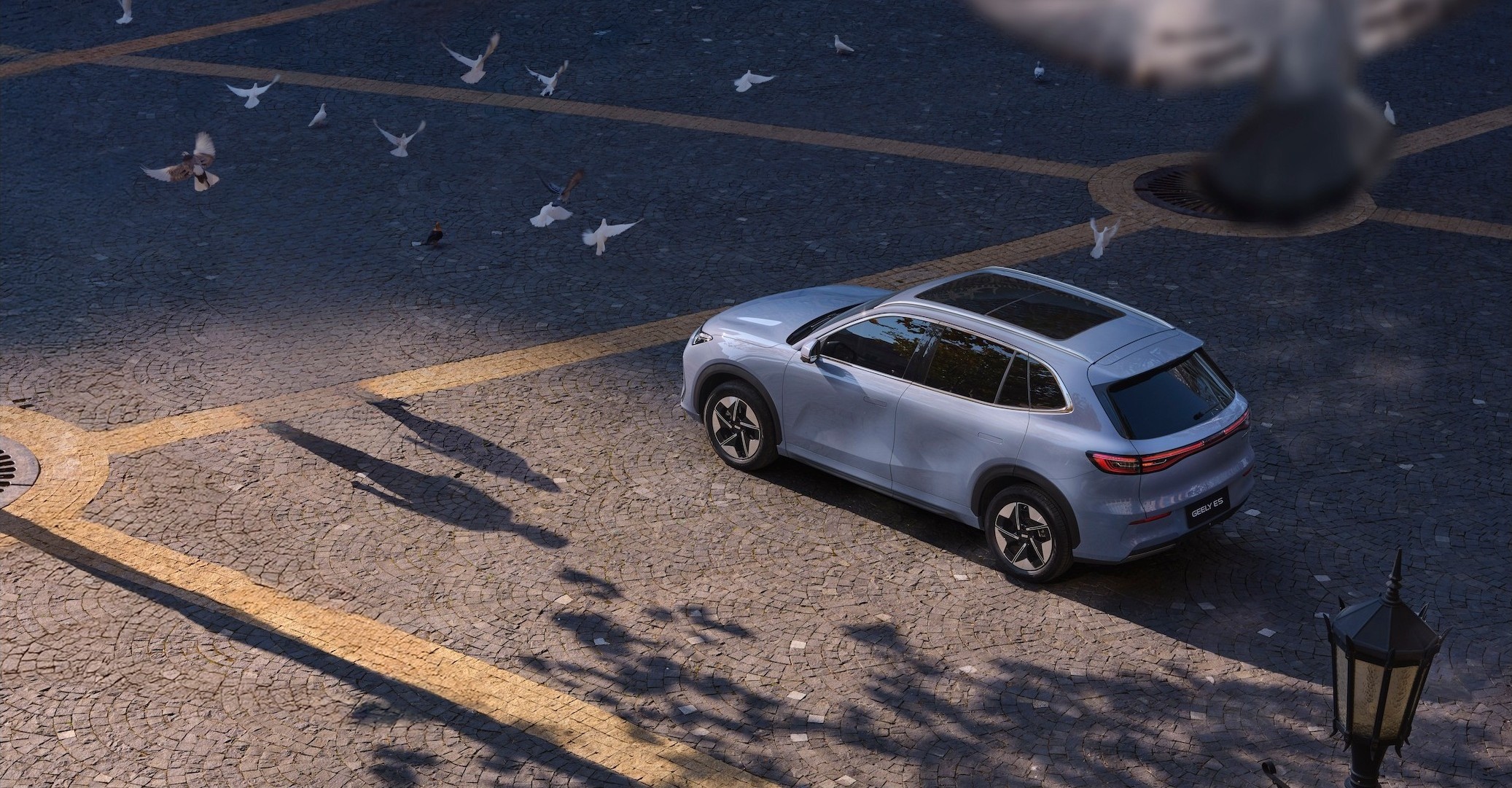
Geely EX5/E5 EV – Comprehensive Review – can the EX5/E5 tow, need a Geely EX5/E5 towbar?
The Geely E5, also known as the EX5 in certain international markets, represents an important step in Geely's expansion into the global electric vehicle market. It is a fully electric, five-seat family SUV developed to compete in one of the most competitive segments of the automotive industry.
Rather than positioning itself purely as an affordable electric vehicle, Geely has attempted to create a product that combines contemporary styling, substantial interior space, modern technology, respectable driving performance and a relatively sophisticated level of comfort. Its appeal lies in offering much of what buyers expect from more established electric SUV manufacturers, while maintaining a strong emphasis on value.
The EX5/E5 is built on Geely's dedicated GEA electric vehicle architecture, rather than being a conventional petrol-powered vehicle converted to electric propulsion. This gives the engineers greater freedom to optimise the interior packaging, battery integration, weight distribution and passenger accommodation.
The result is a vehicle that feels designed from the outset as an electric family car. However, its real competitiveness depends on more than its specifications. Battery efficiency, charging performance, driving refinement, software quality, after-sales support and long-term reliability are equally important considerations.
Exterior design and proportions
The Geely EX5/E5 adopts a relatively conservative approach to exterior styling. It does not attempt to look futuristic through exaggerated bodywork, unusual proportions or overly complicated design features. Instead, it has a smooth, aerodynamic appearance with a rounded front end, gently sloping bonnet, narrow lighting elements and a clean, uncluttered body profile.
The front section is particularly distinctive because of its largely closed-off appearance, which is typical of modern electric vehicles. The lighting arrangement gives the vehicle a contemporary identity without making it look excessively aggressive. The absence of a conventional radiator grille contributes to the clean design, while the lower front air intake provides the necessary airflow management.
From the side, the EX5/E5 has the proportions of a conventional family SUV. Its relatively long wheelbase, short overhangs and gently descending roofline give it a balanced appearance. The door surfaces are relatively simple, and the flush-style exterior details contribute to the impression of a modern vehicle.
At approximately 4.62 metres long, 1.90 metres wide and 1.67 metres high, it occupies a useful middle ground between compact electric crossovers and larger family SUVs. Its 2.75-metre wheelbase is particularly important because it helps create a spacious passenger compartment.
The rear design is equally restrained. A full-width lighting arrangement gives the vehicle a recognisable nighttime appearance, while the tailgate and bumper have been designed to maintain a relatively clean visual impression.
Overall, the exterior is attractive without being especially memorable. Some buyers will appreciate its understated appearance, while others may consider it too anonymous compared with more distinctive competitors. Nevertheless, the design is unlikely to become dated particularly quickly.
Interior design, materials and build quality
The cabin is one of the Geely EX5/E5's strongest selling points. Geely has clearly attempted to create an environment that feels more premium than its positioning might initially suggest.
The dashboard follows a minimalist design philosophy, with a large central touchscreen, a digital instrument display and relatively few conventional physical controls. The overall arrangement looks modern and uncluttered, while the choice of materials and surface finishes gives the cabin a more sophisticated impression than many buyers might expect from a relatively new entrant in the electric SUV market.
The upper dashboard, door panels and frequently touched surfaces generally provide a pleasant tactile experience. Depending on specification, the interior can feature contrasting upholstery, ambient lighting, electrically adjustable seats and additional comfort equipment.
Build quality appears generally convincing. Panel alignment, switchgear operation and the overall solidity of the cabin give a positive first impression. There is little to suggest that Geely has treated this vehicle as an inexpensive experimental product.
However, perceived quality and long-term durability are not necessarily the same thing. The EX5/E5 still needs to establish a long-term reputation for resistance to rattles, wear, electronic faults and ageing interior materials.
The driving position is comfortable and relatively easy to adjust. The seats provide good general support, although their suitability for longer journeys will depend partly on individual body shape and personal preference. Higher specifications offer additional electrical adjustment and comfort features.
One particularly important consideration is the reliance on the central touchscreen. Many functions that would traditionally be controlled through physical buttons are incorporated into the infotainment system. This creates a visually clean dashboard, but it can make routine adjustments less intuitive.
Changing climate settings, navigating menus or adjusting vehicle functions can require more attention than is desirable while driving. The touchscreen itself is responsive, but the overall user experience depends heavily on software organisation and menu design.
The steering-wheel controls also require some familiarisation. Their layout is not necessarily as intuitive as that found in more established European and Japanese manufacturers.
In terms of cabin ambience, however, the EX5/E5 makes a favourable impression. It feels contemporary, spacious and well equipped, with a level of presentation that should satisfy most family-car buyers.
Passenger space and practicality
The Geely EX5/E5 is particularly convincing when it comes to passenger accommodation.
The dedicated electric platform allows the vehicle to make efficient use of its external dimensions, and the relatively long wheelbase provides generous space for occupants.
The front seats offer a comfortable amount of headroom and legroom, while the dashboard design helps create an open feeling. The centre console provides storage opportunities, although the exact arrangement and usefulness of individual compartments depend on the specification.
The rear passenger compartment is arguably even more impressive. Legroom is generous, and the relatively flat floor improves comfort for passengers sitting in the middle position.
This is an important advantage over some electric SUVs that have substantial floor-mounted battery packs but do not make particularly good use of the available interior volume.
Two adults can travel comfortably in the rear, even when the front seats are occupied by taller passengers. Three adults can also be accommodated, although the middle passenger will naturally have less shoulder room and a less comfortable seating position than those sitting at the sides.
Rear-seat comfort is enhanced by the generally spacious cabin, and the EX5/E5 is well suited to family use, regular commuting and longer journeys with several occupants.
The luggage compartment offers approximately 461 litres of capacity in the commonly quoted European specification. This is a respectable figure, although not particularly outstanding for a vehicle of this external size.
With the rear seats folded, the available loading capacity increases considerably, reaching approximately 1,877 litres depending on the measurement method and specification.
The boot is sufficiently practical for everyday shopping, suitcases, pushchairs and general family equipment. Nevertheless, buyers who regularly carry bulky objects may find some competitors more accommodating. The best solution is to install a Geely EX5/Ed Towbar!
The EX5/E5 is therefore a spacious passenger vehicle, but its luggage capacity is not quite as impressive as its rear-seat accommodation.
Electric motor and driving performance
The Geely EX5/E5 uses a single electric motor driving the front wheels. In the commonly offered 60.22 kWh version, the motor produces approximately 160 kW, equivalent to 217 horsepower, and delivers 320 Nm of torque.
These figures place it comfortably within the competitive range for a family-oriented electric SUV.
Acceleration is immediate, as expected from an electric powertrain. The absence of conventional gear changes produces smooth and continuous power delivery, while the substantial torque allows the vehicle to accelerate confidently from low speeds.
The claimed acceleration from 0 to 100 km/h is approximately 6.9 seconds in the lower-specification version, with some higher-specification variants quoting around 7.1 seconds.
These are respectable figures for a family SUV, and the EX5/E5 should have no difficulty merging into fast-moving traffic, overtaking slower vehicles or accelerating onto motorways.
However, its performance is better described as brisk and accessible than genuinely sporty.
The front-wheel-drive configuration provides straightforward everyday usability, but applying substantial power during acceleration can occasionally challenge front-wheel traction, particularly on wet or uneven surfaces.
There is also a difference between the theoretical performance figures and the way the vehicle actually feels. The power delivery is smooth rather than dramatic, and the EX5/E5 does not necessarily create the sensation of speed associated with some more performance-oriented electric vehicles.
For normal family use, this is hardly a disadvantage. The powertrain provides sufficient performance without making the vehicle unnecessarily aggressive or difficult to drive.
The single-speed transmission operates smoothly, and the general refinement of the electric drivetrain is one of the vehicle's positive characteristics.
Ride comfort and suspension
Ride quality is one of the more interesting aspects of the Geely EX5/E5 because it demonstrates both the strengths and limitations of its engineering approach.
The suspension has been tuned with comfort as a priority. At relatively low speeds, the vehicle deals reasonably well with road imperfections, minor potholes and uneven urban surfaces.
Its soft suspension calibration helps prevent the cabin from feeling unnecessarily harsh, particularly during normal commuting and everyday driving.
This is an appropriate characteristic for a family SUV, where comfort is generally more important than sharp cornering behaviour.
However, the suspension tuning is not entirely successful in every situation.
On undulating roads, the vehicle can exhibit noticeable vertical movement, while its relatively soft setup allows more body movement during faster cornering. The result is a driving experience that can feel slightly less controlled than that of some established European competitors.
There is also a compromise between low-speed comfort and high-speed stability. Although the EX5/E5 remains perfectly usable at motorway speeds, its suspension does not always feel as tightly controlled as one might expect.
The steering is relatively light, making manoeuvring and parking easy. Nevertheless, it provides limited feedback, particularly when driving enthusiastically on winding roads.
This is not a vehicle designed to reward spirited driving. Its priorities are comfort, convenience and predictable everyday behaviour.
For buyers who value relaxed driving, this approach makes sense. Those expecting a particularly sophisticated balance between ride comfort and handling precision may find the EX5/E5 less convincing.
Noise insulation and refinement
Electric vehicles benefit naturally from the absence of combustion-engine noise, but this does not automatically make them quiet.
Tyre noise, suspension movement, wind resistance and road-surface characteristics become
more noticeable when the conventional engine is removed from the equation.
The Geely EX5/E5 performs reasonably well in this respect.
At urban speeds, the cabin is generally quiet, and the electric motor operates smoothly. There is little vibration through the steering wheel, pedals or seats, which contributes to the feeling of refinement.
At motorway speeds, wind and tyre noise become more apparent, but the vehicle generally provides a comfortable environment for conversations and listening to music.
The quality of the cabin insulation is competitive, although the overall experience will vary depending on tyre selection, road surface and speed.
The EX5/E5 is therefore a pleasant vehicle for longer journeys from a refinement perspective, even if it does not establish a new benchmark for acoustic insulation.
Battery technology and driving range
Battery performance is arguably the most important consideration when evaluating the Geely EX5/E5.
The commonly specified European version uses a 60.22 kWh lithium iron phosphate battery, generally referred to as an LFP battery. This chemistry has become increasingly popular in electric vehicles because of its thermal stability, durability potential and reduced dependence on certain expensive battery materials.
Geely has also developed its own Short Blade Battery technology, which is intended to improve packaging, structural integration and battery performance.
The EX5/E5 uses a cell-to-body integration approach, incorporating the battery into the vehicle's structural design. This helps make more efficient use of available space and contributes to overall body rigidity.
The official WLTP driving range of the 60.22 kWh version is approximately 430 km in the Pro specification and 425 km in the higher-equipped Max specification. The difference is partly attributable to equipment and weight variations.
These figures are respectable, but they are not particularly impressive when compared with some newer electric SUVs offering larger batteries and longer homologated ranges.
In real-world driving, the actual range will depend considerably on speed, ambient temperature, road conditions, passenger load, heating or air-conditioning use and driving style.
For predominantly urban and suburban driving, the EX5/E5 should offer a reasonably useful operating range. Regenerative braking helps recover energy during deceleration, while the electric drivetrain is particularly efficient in stop-start traffic.
On faster roads, however, energy consumption increases significantly. Sustained motorway speeds place greater demands on the battery, and the available range can fall considerably below the official figure.
A useful way to evaluate the vehicle is to consider the difference between its advertised range and a realistic travel-planning range. Drivers should not assume that 425–430 km will routinely be available under all conditions.
For long-distance travel, a more conservative range expectation is sensible, particularly during cold weather or when maintaining motorway speeds.
The battery itself is a positive aspect of the EX5/E5's engineering. LFP technology is generally associated with good cycle-life characteristics, and it is particularly suitable for owners who regularly charge their vehicles to a high state of charge.
Nevertheless, the long-term performance of Geely's particular battery installation remains something that only years of real-world ownership can establish conclusively.
Charging performance
Charging is one of the areas where the EX5/E5 is competent but not class-leading.
The commonly specified 60.22 kWh version supports AC charging at up to 11 kW and DC rapid charging at a maximum of approximately 100 kW.
The AC charging capability is appropriate for domestic wallbox installations and public AC charging stations. With a suitable three-phase 11 kW supply, the vehicle can be recharged conveniently overnight.
The DC charging specification is more modest.
Geely quotes approximately 20 minutes for charging from 30% to 80% under suitable conditions. This is a useful figure, although it is important to understand that it does not represent a complete charging session from a nearly empty battery to 80% or 100%.
Furthermore, maximum charging power is not maintained throughout the entire charging process. The actual charging speed depends on battery temperature, state of charge, charger capability and the vehicle's battery management system.
The 100 kW peak figure is adequate for occasional long-distance journeys, but several competing electric vehicles offer higher charging power and potentially shorter motorway charging stops.
The EX5/E5 is therefore better suited to an ownership arrangement in which most charging takes place at home or at a regular destination, rather than relying exclusively on public rapid chargers.
Its charging performance should be perfectly acceptable for ordinary commuting and family travel, but frequent long-distance drivers may find its battery capacity and charging speed somewhat limiting.
Another important consideration is preconditioning. Buyers should establish exactly how battery preconditioning operates in their particular market specification, especially whether the navigation system automatically prepares the battery for rapid charging in cold conditions.
This can have a meaningful effect on charging performance during winter.
Energy efficiency and running costs
The official energy consumption figures for the 60.22 kWh version are approximately 15.8–16.0 kWh per 100 km under the WLTP measurement system.
This is a reasonable figure for a vehicle of this size and weight.
The EX5/E5 benefits from an electric powertrain with relatively few moving components compared with a conventional combustion-engine vehicle. There is no traditional engine oil, exhaust system, fuel injection system or multi-speed automatic gearbox requiring routine maintenance.
Regenerative braking can also reduce wear on the mechanical braking system, particularly when the vehicle is used primarily in urban environments.
However, electric vehicle ownership is not entirely maintenance-free. Tyres, suspension components, brake fluid, cabin filters, coolant systems and other components still require inspection and servicing.
The vehicle's relatively substantial weight also means that tyre selection and tyre wear deserve attention.
Electricity costs will depend heavily on the charging arrangement. Owners who charge at home using an economical electricity tariff can benefit from relatively low running costs.
Those relying on expensive public rapid-charging networks may find the financial advantage considerably reduced.
Overall, the EX5/E5 has the potential to be economical to operate, particularly for owners who can charge regularly at home.
Infotainment and digital technology
Technology is an important part of the Geely EX5/E5's appeal.
The cabin features a large 15.4-inch central infotainment touchscreen, accompanied by a digital instrument display. Depending on specification, additional equipment includes a head-up display, premium audio system, wireless smartphone charging, connected services and over-the-air software updates.
The screen is visually impressive and provides access to the vehicle's principal functions.
The interface is designed to combine navigation, entertainment, vehicle settings, climate controls and connectivity in a single digital environment.
However, this is also one of the EX5/E5's more controversial characteristics.
The concentration of functions within the touchscreen creates a learning curve. Some everyday adjustments require navigating menus rather than simply operating a physical switch.
This is particularly noticeable when changing climate settings or adjusting certain vehicle functions while driving.
Software responsiveness is generally reasonable, but responsiveness alone does not guarantee an excellent user experience. Menu organisation, translation quality, voice recognition and the number of steps required to access particular functions are equally important.
The voice-control system is an interesting feature, allowing the driver to operate certain functions using spoken commands.
In practice, however, voice assistants in modern vehicles can be inconsistent. Recognition accuracy, supported languages and the ability to understand natural speech can vary considerably.
A particularly informative extended road test published in September 2026 identified the cabin's comfort as a major strength, but also highlighted the software's tendency to request repeated confirmations and the inconsistency of its voice assistant. This is an important distinction between impressive technology on a specification sheet and genuinely convenient technology in everyday use.
HVI
Over-the-air updates are another potentially valuable feature. They allow certain software improvements to be delivered without requiring a conventional workshop visit.
However, the long-term value of this system will depend on how consistently Geely provides updates, whether improvements reach all vehicle functions and how effectively software problems are resolved.
The infotainment system is therefore promising, but it is not yet one of the vehicle's most convincing attributes.
Audio system and comfort equipment
Geely has placed considerable emphasis on creating a premium-feeling cabin through equipment and convenience features.
Higher specifications can include an upgraded audio system, ambient lighting, a panoramic glass roof, electrically adjustable seats and additional seat-comfort functions.
The premium Flyme audio installation, where fitted, is particularly noteworthy. Its advertised configuration includes 16 speakers and a claimed output of 1,000 watts.
This gives the EX5/E5 a potentially impressive entertainment environment, particularly for occupants who spend considerable time travelling.
The panoramic roof contributes to the sense of space and makes the passenger compartment feel more open. Its usefulness will depend on climate conditions and personal preference, but the inclusion of a sunblind is important for managing direct sunlight and cabin temperature.
Seat equipment varies by specification, so buyers should distinguish between features available on the model range and those actually included in the particular vehicle being considered.
This is especially important when comparing the entry-level and higher trim levels.
Safety and driver-assistance systems
Safety is an important part of the EX5/E5's overall package.
The model achieved a five-star Euro NCAP safety rating, providing reassuring independent evidence of its crash-protection performance.
Its safety equipment includes multiple airbags, electronic stability control, anti-lock braking, tyre-pressure monitoring and a range of advanced driver-assistance systems.
Depending on specification, these systems include adaptive cruise control, autonomous emergency braking, lane-keeping assistance, blind-spot monitoring, rear cross-traffic alert and driver-attention monitoring.
The inclusion of these technologies is valuable, particularly in a family-oriented SUV.
However, there is a distinction between the availability of safety systems and the quality of their operation.
Some independent road tests have criticised the calibration of the driver-assistance systems. Lane-keeping assistance can feel intrusive, while collision-warning systems may sometimes react too enthusiastically to situations that do not appear particularly dangerous.
This can undermine driver confidence, even when the systems are technically functioning as intended.
The touchscreen-based configuration of certain assistance functions also creates an additional inconvenience.
Ideally, a driver should be able to adjust frequently used safety settings quickly and intuitively without having to navigate several layers of menus.
The EX5/E5 therefore offers a strong safety specification, but the real-world behaviour of its assistance systems deserves attention during a test drive.
A five-star crash-test rating is reassuring, but it should not be interpreted as evidence that every electronic assistance feature is equally well calibrated.
Driving experience in everyday conditions
The Geely EX5/E5 is best understood as a comfortable and relatively refined family vehicle rather than an electric SUV designed around driving excitement.
In urban environments, its smooth electric power delivery, light steering and elevated seating position make it easy to use. The immediate availability of torque is particularly helpful when pulling away from traffic lights or negotiating busy roads.
Its dimensions are manageable for a vehicle in this category, although the nearly 1.90-metre width should be considered when navigating narrow streets or older parking facilities.
The turning circle of approximately 10.8 metres is reasonable for its size.
On country roads, the EX5/E5 remains predictable, but its soft suspension and relatively light steering do not encourage particularly enthusiastic driving.
On motorways, its comfortable seating, quiet electric drivetrain and stable general behaviour make it a pleasant long-distance companion.
However, the battery capacity and charging performance are more relevant limitations when undertaking frequent extended journeys.
The EX5/E5 is therefore particularly well suited to a combination of daily commuting, family transportation and occasional longer trips.
It is less convincing as a vehicle for people who regularly undertake very long journeys and expect exceptionally fast charging and a large motorway range.
The 2026 model and specification differences
One important point when researching the Geely EX5/E5 is that specifications are not identical across all markets.
The widely reviewed version uses a 60.22 kWh LFP battery, 160 kW electric motor and approximately 425–430 km of WLTP range.
However, a further Pro+ configuration introduced in certain European markets during 2026 has been reported with a 66.33 kWh net battery and a claimed WLTP range of up to 450 km.
This means that not every review, specification sheet or range figure necessarily describes the same version of the vehicle.
The distinction is important when comparing prices, charging times, range and equipment.
It is also worth understanding that the EX5/E5 and EX5 names are used in different markets for this model family. A review published under the EX5 name may still be relevant to the EX5/E5, but the precise specification and model year should always be checked.
Overall assessment
The Geely EX5/E5 is a credible and generally well-engineered electric family SUV that demonstrates how quickly Geely has developed its capabilities in the electric vehicle market.
Its strongest qualities are not necessarily found in its headline technical specifications, but in the overall ownership proposition. It offers a spacious cabin, comfortable seating, smooth electric performance, contemporary equipment and a relatively sophisticated interior environment.
The vehicle feels particularly well suited to people who want an uncomplicated, comfortable and practical electric SUV for everyday use.
Its weaknesses are equally important. The driving experience is competent rather than exceptional, its charging capabilities are adequate rather than class-leading, and its software requires further refinement. These shortcomings become more significant when compared with vehicles from manufacturers that have spent considerably longer developing their electric vehicle platforms and software ecosystems.
I would consider the Geely EX5/E5 a particularly interesting proposition for someone who has access to convenient home charging, spends most of their time driving locally or regionally, and values passenger comfort and equipment more than sporty handling or maximum motorway range.
For someone who regularly travels long distances, expects very rapid charging or places great importance on sophisticated software and driver-assistance systems, I would investigate the alternatives carefully before making a decision.
Ultimately, the EX5/E5 is not a revolutionary electric SUV, nor is it the best in every individual category. Its appeal comes from offering a well-rounded package with relatively few fundamental shortcomings.
My overall assessment is that the Geely EX5/E5 is a good electric family SUV, with particularly strong passenger comfort and interior space, but it still needs improvements in software, chassis refinement and long-distance charging performance to become a segment leader.
It is a vehicle worth taking seriously, rather than dismissing as another relatively new entrant into the electric vehicle market.
Technical reference
The following figures describe the commonly specified 60.22 kWh version, not necessarily every 2026 market variant.
|
Specification
|
Geely EX5/E5
|
|
Vehicle category
|
Electric SUV
|
|
Platform
|
GEA
|
|
Battery chemistry
|
LFP
|
|
Battery capacity
|
60.22 kWh
|
|
Electric motor
|
Single, front-mounted
|
|
Maximum power
|
160 kW / 217 hp
|
|
Maximum torque
|
320 Nm
|
|
Drivetrain
|
Front-wheel drive
|
|
0–100 km/h
|
6.9–7.1 seconds
|
|
Maximum speed
|
175 km/h
|
|
WLTP range
|
425–430 km
|
|
Official consumption
|
15.8–16.0 kWh/100 km
|
|
Maximum AC charging
|
11 kW
|
|
Maximum DC charging
|
100 kW
|
|
DC charging time
|
Approximately 20 minutes (30–80%)
|
|
Length
|
4,615 mm
|
|
Width
|
1,901 mm
|
|
Height
|
1,670 mm
|
|
Wheelbase
|
2,750 mm
|
|
Boot capacity
|
461 litres
|
|
Boot capacity, seats folded
|
1,877 litres
|
|
Seating capacity
|
Five
|
Sources: Geely's published technical specifications and European product information
Geely EX5/E5 EV – Towing and towing capability
Towing is one of the more important limitations to consider before buying the Geely E5. The answer is slightly complicated because towing capacity depends on the model version and market specification. Not every Geely E5/EX5 is approved for towing.
The good news is that Geely has started introducing towing-approved versions on newer models, including a version rated to tow 750 kg with a braked trailer.
Maximum towing capacity
750 kg on approved versions
The recently introduced UK Geely EX5 has an officially announced towing capacity of 750 kg for a braked trailer. It also features Trailer Stability Assist.
This is a useful development, but it is important not to assume that the same rating applies to every E5.
For versions without an approved towing rating, fitting an aftermarket towbar does not automatically make the vehicle legally authorised to tow. You cannot tow more than your ar is rated for, irrespective of the towbar rating☹ The good news is you can just use it to transport bikes, with a ball mounted bike carrier.
What can you realistically tow?
A 750 kg rating is intended for relatively light loads. It could be suitable for a small luggage trailer, lightweight camping trailer or some small utility trailers.
It is not sufficient for most conventional caravans, larger boat trailers or substantial equipment trailers.
There are also practical considerations when towing with an electric vehicle.
Driving range: Expect a substantial reduction in range, particularly with a tall trailer or at motorway speeds. Aerodynamic drag can be more significant than the trailer's weight.
Acceleration: The 320 Nm electric motor should provide adequate pulling performance for a light trailer, although front-wheel drive can struggle for traction on wet grass, steep inclines and loose surfaces.
Stability: Trailer Stability Assist is a useful feature on approved versions, helping manage trailer sway.
Geely EX5 in Australia – Is it rated to tow?
Yes, but there is an important distinction between the existing Australian EX5 and the newly approved towing variant.
As of November 2026, the Australian situation is as follows:
- Existing EX5 Complete and Inspire: 0 kg official towing capacity. They are not approved to tow conventional trailers.
- New towing-approved variants: Australian government approval documentation identifies new EX5 variants, including one with a maximum braked towing capacity of 750 kg.
|
Variant code
|
Braked trailer
|
Unbraked trailer
|
|
Existing Complete / Inspire variants
|
0 kg
|
0 kg
|
|
New MF variant
|
0 kg
|
750 kg
|
|
New MG variant
|
750 kg
|
750 kg
|
The MG is therefore the variant to look for if braked-trailer towing is required.
Before purchasing a towbar, check the vehicle's towing rating in the owner’s manual! Particularly its permitted braked and unbraked trailer masses and maximum vertical towball load.
Order your Geely EX5/E5 towbar today, we have a fixed, Quick Release and Invisible model available.


 The tow bar becomes completely invisible - the lines of your car are not spoiled in the slightest.


 Select your Vehicle


